

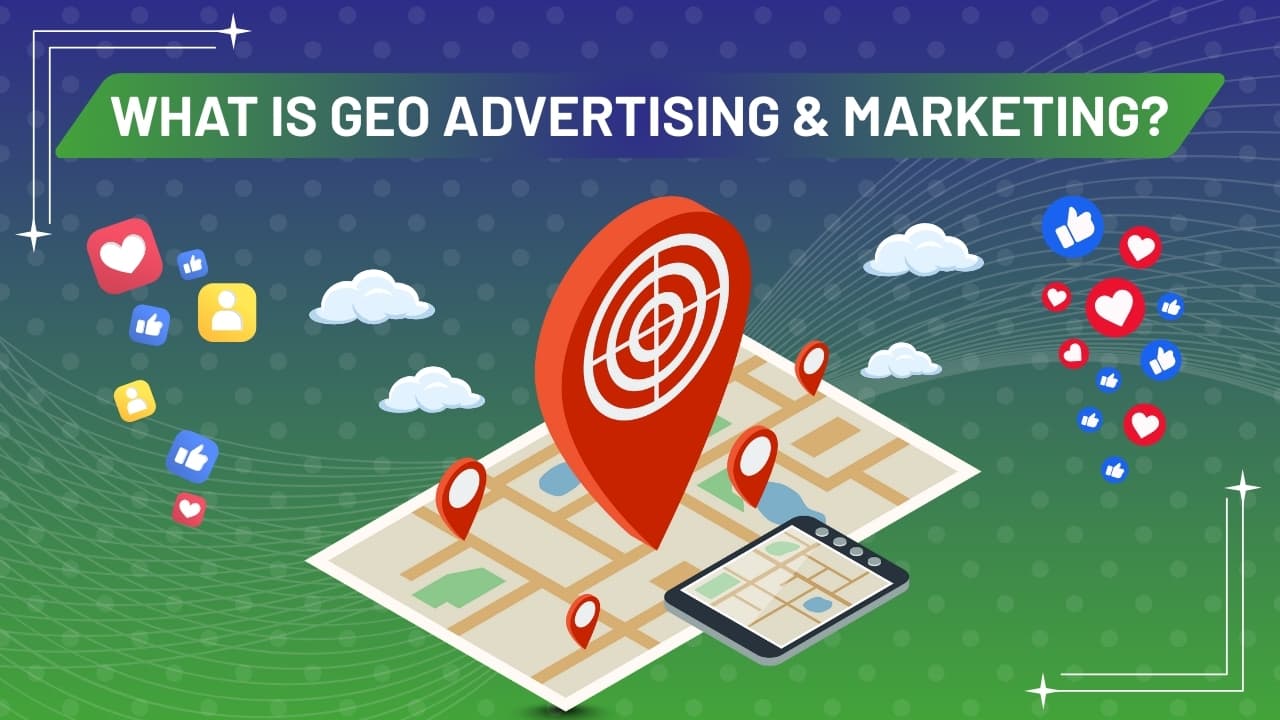
Geo advertising and geo marketing both use location and make your marketing smarter, more targeted, and profitable. It involves geo advertising or location based advertising which allows to display ads to people in specific places such as city, neighborhood, pin code rather than displaying the generic advertisement to everyone.
Geo marketing goes beyond that as it uses location data to develop your overall marketing strategy focusing on where your best customers live, which areas respond best, and how to adapt offers for different regions.
Together, geo advertising and geo marketing help you answer two major questions:
-
Who should see this message based on where they are?
-
Where should we focus our time, budget, and campaigns for the best results?
Having tools like geo-targeting, geofencing, and proximity marketing, lets brands reach nearby customers, promote local offers, increase store visits, and even have competitive advantage over your competitors by targeting people who are close to competitor locations.
Being in a world where people constantly use their phones to search “near me”, order food, book tickets, and find local events, location-based marketing is no longer optional. Rather, it is one of the most powerful ways to show online ads to the right people to ensure that the message reaches the right place and at the right time.
What Is Geo Advertising?
Geo advertising(also called location-based advertising)is the practice of delivering ads based on a person’s geographic location. Rather than showing the same message to everyone in a country, you show specific ads to people:
-
In a certain city or region
-
Within a radius of your store or event
-
Inside a defined area like a mall, campus, or stadium
-
Who have previously visited a particular place
Simple example:
-
You own a pizza shop in a specific neighborhood.
-
You run Facebook or Google ads only to people within 3 km of your shop.
This allows you to match your message with the real-world context of your audience. An event organizer can show ticket ads mainly to people in the host city. A retail brand can target visitors of a mall where they have a store.
Types of Geo-Advertising
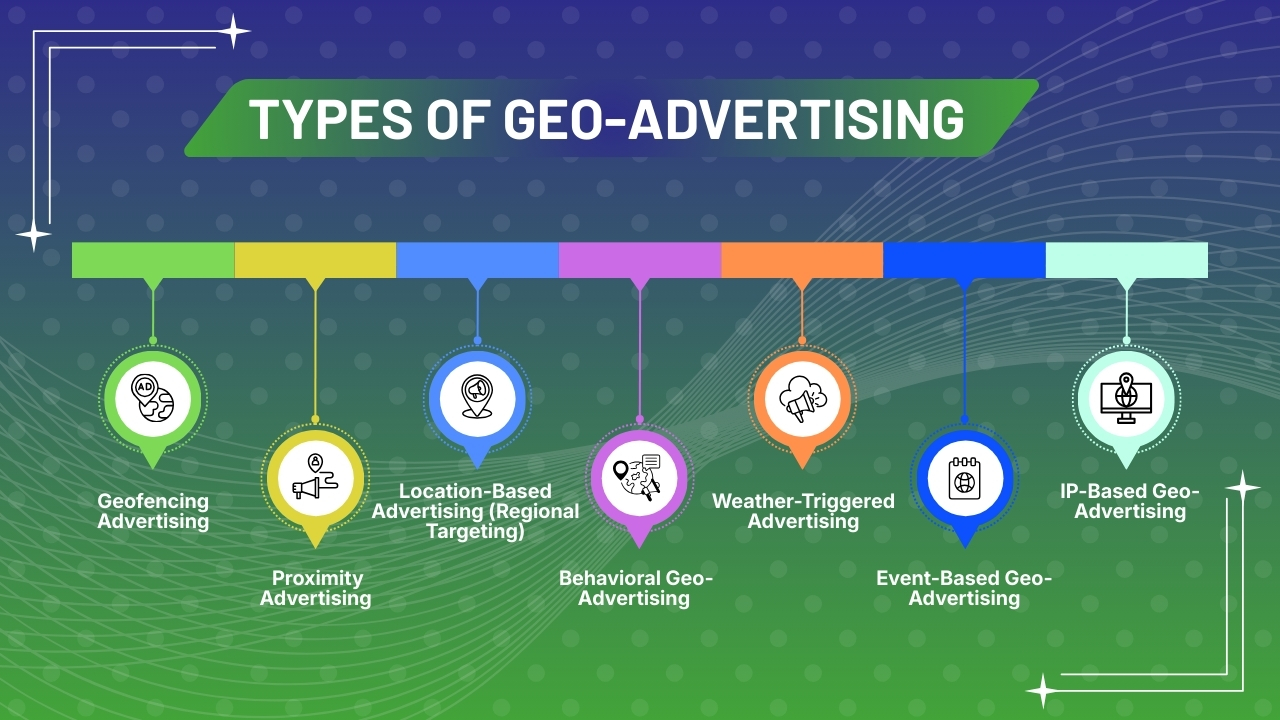
Here are the key types of geo-advertising:
1. Geofencing Advertising
Geofencing advertising uses virtual boundaries around specific locations like shopping malls, office parks. Then, whenever a user enters or leaves that area, then the ads are shown on their mobile device. This form of advertising works well for urgent offers as it reaches the right users at the right time and they are most likely to take action.
2. Proximity Advertising
Proximity advertising uses GPS, Wi-Fi, Bluetooth signals to target users who are physically close to their business stores.For instance, a restaurant shows lunch offers to drivers passing between lunch hours.
3. Location-Based Advertising (Regional Targeting)
This type delivers ads based on broader geographic areas like countries,states, cities, or ZIP codes. It is commonly used for localizing campaigns, adjusting language, promoting regional offers, or highlighting nearby store locations.
4. Behavioral Geo-Advertising
Behavioral geo-advertising combines location data with user behavior, including search history, visited places, app usage, and route planning. Ads are shown based on inferred intent like travel ads for someone researching destinations or shopping ads near retail districts.
5. Weather-Triggered Advertising
Ads automatically adjust based on real-time weather conditions in a specific location. For instance, brands can advertise umbrellas during the rainy season, cold beverages during heatwaves, or warm meals during cold weather.
6. Event-Based Geo-Advertising
This targets users attending or travelling to events like concerts, festivals, sports matches, conferences, or rallies. It allows brands to reach large, relevant audiences at peak engagement moments.
7. IP-Based Geo-Advertising
IP-based geo-advertising uses a user’s IP address to estimate location, especially on desktops. Brands then show region-specific ads, store details, language, or offers helping campaigns stay relevant without requiring GPS or app permissions.
What Is Geo Marketing?
Geo marketing goes beyond simply deciding who sees an advertisement. This form of marketing involves using location data to develop your entire marketing and business strategy. Instead of guessing about your best opportunities, geo marketing with real data lets you know where your strongest customers come from and which areas respond best.
With geo marketing, you can:
-
Find where your best customers live and work so you get to know which areas require more focus.
-
Identify the areas that perform best in terms of inquiries, visits, or sales.
-
Decide where to open a new store, outlet, warehouse, or service area based on real demand and not just intuition.
-
Customize offers, pricing, and messaging by region because what works in one city or neighborhood may not work in another.
-
Plan how to use both online and offline marketing in each location, combining digital campaigns with local events, print, or outdoor ads.
Both geo advertising and marketing are based on the same foundation which is location data. Geo marketing using location insights lets you make bigger decisions about where to grow, which markets to prioritize, what to promote, and how to allocate budget for the best return.It helps you avoid putting your efforts everywhere and instead focus on the cities, zones, and neighborhoods with the highest potential.
How Does Geo-Advertising Work?
Geo-advertising uses both location data and user behavior to show advertisements to the right people at the right time. Instead of guessing, geo advertising depends on insights from the real world.
First, location data and behavior are collected. Then geo-ad platforms use GPS, Bluetooth, Wi-Fi hotspots, and cell towers to find where the user is. Beyond that, they also analyze activity such as search history, route planning, and frequently visited places to understand their preferences.
For instance, if someone often visits gyms and searches for “running shoes,” the system knows they are likely interested in fitness-related offers.
Then, advertisements are activated as per the targeting rules and conditions which you have set:
-
Geofencing allows you to draw virtual boundaries around main areas like malls, stadiums, or business districts. So that whenever someone enters or leaves the area then your advertisement will be shown.
-
Proximity targeting shows ads when a user is near your location.When a driver passes near your restaurant, then a timely promotion like the meal of the day can appear encouraging users to immediately stop by and increase walk-in visits.
-
Behavioral signals add intent to location targeting. If someone is planning a route to a shopping mall, searching for stores, or researching a country they want to visit, ad platforms can infer what they need next. Then they serve timely ads for nearby shops, services on the way, or travel products, helping brands to reach people at decision time.
-
Time and context refine geo-advertising by matching offers to real-life routines. Rather than showing the same advertisements all day, campaigns can adjust advertisements by hour, day, weather, or local events. For instance, a cafe can show breakfast and coffee ads during morning hours and then show lunch combos by midday. It makes ads feel helpful, because it appears when their need is strongest and purchase chances are highest.
Finally, geo-ads appear inside tools people already use like navigation apps(pins, banners, route prompts), push alerts for nearby deals or events, local search results, and interactive rich formats like rich media maps or branded icons. All of this makes geo-advertising feel helpful and not a random interruption.
How does Geo Marketing Work?
Geo marketing works by using location data to show ads, messages, or content to people based on their location or activity. Rather than sending the same message to a wider audience, geo marketing is about reaching users in specific cities or locations or even users with close proximity to your business.
The process begins with location signals from GPS, Wi-Fi networks, mobile apps, IP addresses, or navigation and map activity. Platforms combine location data along with search activity, visited locations to understand user intent. For instance, someone searching for “restaurants near me”.
Then, marketers set rules for when and where advertisements should appear. It includes geofencing such as showing ads when someone enters or leaves a defined area, proximity targeting(showing ads when users are nearby), or regional targeting(by city, state, or country). Timing and context also play a role, allowing ads to change based on time of day, weather, or local events.
Benefits of Geo Advertising & Geo Marketing

Below are some advantages of geo advertising and geo marketing:
1. Highly Relevant Targeting
Geo advertising reaches users on the basis of their real time or regional information thereby making advertisements more relevant and timely. This increases the chances that people will notice, engage, and take action.
2. Improved Return on Ad Spend (ROAS)
It involves targeting only those audiences who can respond in real time such as the people near a store, or within a service area. It reduces wasted impressions and gets more value from their marketing budget.
3. Drives Foot Traffic and Local Conversions
Geo marketing is particularly powerful for physical locations because it targets people who are already nearby. By offering timely in-store offers and local deals, businesses can immediately influence decisions and improve local conversions.
4. Personalized Customer Experience
Location-based messaging lets brands personalize ads with local language, offers, region-specific content and thereby making campaigns feel more useful and relevant.
5. Real-Time Campaign Flexibility
Real-time flexibility allows campaigns to change based on what is happening right now. Campaigns can adapt instantly on the basis of the time of day, weather, local events thereby ensuring messages stay contextually relevant.
6. Stronger Engagement and Higher Conversion Rates
Stronger engagement happens when ads feel relevant to the situation of someone. If a user is nearby, searching, location based ads match with the real intent. It increases clicks and follow-through like calls, directions, bookings, or purchases because the message fits what they need right now.
7. Competitive Advantage
Geo advertising will give a competitive advantage as it reaches customers at the same time when a decision happens. It allows brands to target high-traffic areas like malls,areas near competitor locations and provide timely offers.
For example, when people are already shopping or comparing options, and if they are provided with a relevant discount, benefit, or reminder can win attention and drive conversions.
Channels Where You Can Use Geo Targeting
1. Search Ads (Google Ads, Bing Ads)
Target by country, state, city, radius, or location groups which is perfect for high-intent “near me” searches like restaurants, events, churches, or ticket booking. It is essential to add location extensions to show your address, phone, and direction on Maps.
2. Social Media Ads (Facebook, Instagram, TikTok, Snapchat, LinkedIn)
Reach people living in, recently in, or traveling in a location. Combine geo targeting with interests, age, job titles, and behaviors which is great for local business growth, city campaigns, event promotions, and region-based recruitment.
3. In-App & Push Notification Campaigns
With location permissions, trigger push alerts when users enter or exit areas, promote local offers or follow up after store visits which is highly effective for retail, restaurants, events, travel, and loyalty programs.
Conclusion
Geo advertising and geo marketing are powerful strategies because they connect your message to a real place, a real moment, and a real need. Rather than running broad campaigns which reach many people who will never take action, geo-based targeting focuses your budget on the audiences most likely to respond like those who are nearby, searching locally, visiting specific areas, or showing intent through their behavior.
Geo marketing is all about relevance at its core. It allows businesses to promote the right offers at the right places, and might show up where decisions actually happen on maps, in search results, inside social feeds and through mobile apps. It also offers flexibility as it allows campaigns to react to weather, traffic, and local events, so your promotions are done on time.
When implemented well, geo advertising does not feel like random interruption. It feels useful like a well-timed suggestion which matches with what users are looking for.
While if your goal is to increase foot traffic, local sales, promoting events, geo advertising allows you to make a smarter and more efficient way to reach customers. The result is less wasted ad expenses, stronger customer engagement, and better customer conversions driven by real-world context.
If you still have any query regarding geo advertising and marketing then feel free to write to us at bloggyhands and we are more than happy to assist you.
John Doe
Digital Marketing Expert
Passionate about creating valuable content that helps businesses grow through digital marketing and innovative strategies.