

For businesses, remarketing is an effective way to reconnect with people who have already shown some interest in your business. But for businesses just running remarketing campaigns alone is not enough.
For achieving better results, it has become essential for businesses to understand how well their campaigns are performing, know their audiences that are responding, and the strategies where their budget is being spent. That is where remarketing monitoring becomes essential.
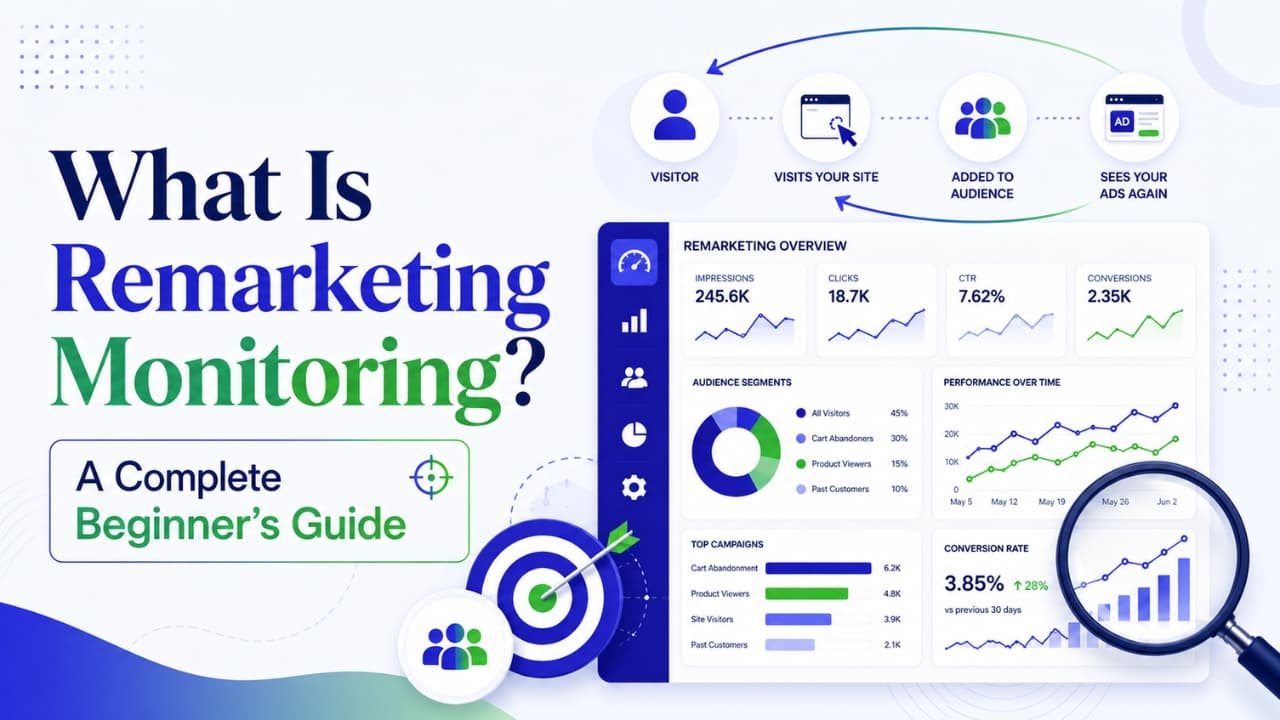
Remarketing monitoring is the process of tracking, analyzing, and improving your retargeting ads, email follow-ups, audience lists, and conversion paths.
It helps businesses to know whether their past visitors will return back, whether they are clicking your ads, completing your purchases, and booking calls. Rather than guessing the strategies that may actually work, tracking provides you real data to guide your decisions.
For beginners, it means paying attention to crucial areas such as ad performance, audience behavior, conversion tracking, click-through rate, cost per conversion, return on investment, and ad frequency.
Such metrics reveal whether your message is reaching the right people at the right time. It also helps to avoid problems such as displaying ads too often, targeting the wrong audience, or spending money on visitors who may not convert.
A strong remarketing strategy relies on continuous marketing. Because customer behavior keeps changing, campaign expenses keep changing, and some ads become less effective with time.
When businesses review this data regularly, then you can improve your messaging, adjust your budget, refine your audience segments, and build a smoother customer journey.
Remarketing monitoring helps businesses to turn missed opportunities into better customer conversions. This gives the businesses the clarity to make data-driven marketing decisions that reduces wasted ad costs, and improves overall campaign performance.
Also Read: What are the Five Marketing Strategies the Retailers Spend Half of their Annual Budget on
Remarketing for Beginners: How to Bring Back Visitors and Increase Conversions
Many visitors will not buy the products when they visit a website for the first time. Rather for the first time, people may just browse a product, compare prices, read a service page, sign up for a newsletter, or add products to their cart and leave.
While it does not indicate that visitors are not interested in the business. Because sometimes people may require more time, trust, a better offer, or need a more reminder before they take action. That is where remarketing becomes essential.
Remarketing is a digital marketing strategy which helps businesses to reconnect with people who have already known your brand. Though these users may have visited your website, viewed a product, watched a video, opened an email, booked a demo, or abandoned a cart.
Instead of targeting new audiences who have never heard of you, remarketing involves focusing on people who have already shown some interest in your brand, product or services.
For businesses, remarketing is one of the most practical ways to improve conversions. As businesses do not have to start from zero instead businesses are continuing a conversation with someone who has already taken the first step.
Also Read: Digital Marketing Strategy for Local Businesses
What Is Remarketing?
Remarketing is the process of displaying targeted ads, emails, messages, or offers to people who have already known your business. For instance, if someone visits your online store and looks at running shoes but leaves without buying, then you later send an ad to that person featuring the same shoes, similar products, or a limited-time discount.
Google Ads uses “data segments” which helps advertisers to reach people who earlier visited a business website, used an app. You can build these audience lists using the Google tag, app data, customer lists, or other connected audience sources.
Remarketing helps businesses to bring back their interested customers rather than losing them forever.
Remarketing vs. Retargeting: What Is the Difference?
Most marketers use the terms remarketing and retargeting interchangeably. Though it is fine in using in marketing conversations while there is a slight difference between remarketing and retargeting.
Retargeting refers to paid ads displayed to people who visited your website or app but did not complete an action. For instance, display ads,
YouTube ads, social media ads, and search ads displayed to old visitors are retargeting examples.
Remarketing is broader. Remarketing involved paid retargeting ads, email follow-ups, SMS reminders, abandoned cart emails, customer win-back campaigns.
While retargeting as more ad-focused while remarketing often includes direct channels such as email and owned customer data.
A strong strategy uses both. Paid ads help to keep your brand visible across platforms, while email, SMS, and CRM workflow helps to build them a more personal relationship.
Why Remarketing Matters
Remarketing is essential because most website visitors do not convert on their first visit. Though visitors may be interested in your product or service, they might leave to compare options, read reviews, check pricing, wait for approval, or simply because they got distracted.
Remarketing gives your business one more chance to reconnect with interested visitors and guide them back.
It can help you:
-
Bring back visitors who viewed your products or services
-
Recover abandoned carts before customers forget
-
Increase brand recall through repeated visibility
-
Nurture leads during a longer buying journey
-
Promote offers to warm audiences
-
Encourage repeat purchases from existing customers
-
Support sales teams with better follow-up
-
Reduce wasted traffic from paid campaigns
Remarketing is especially useful when businesses invest in SEO, Google Ads, social media, content, or influencer marketing. Without remarketing, most visitors leave a business after one session. While remarketing businesses can keep the conversation going and bring them closer to conversion.
How Remarketing Works
Remarketing begins by monitoring how users interact with your website, apps, emails, or ads. When someone visits a business page or completes a specific action, then these visitors can be added to a relevant audience list.
Later businesses can use that list to show targeted ads, send follow-up emails, or create automated campaigns.
Common remarketing audiences include:
-
All website visitors
-
Product page viewers
-
Cart abandoners
-
Pricing page visitors
-
Lead form users who did not book
-
Existing customers
-
Inactive past buyers
-
YouTube video viewers
-
Newsletter subscribers who clicked but did not buy
One of the strong advantages of remarketing comes from validity. Not all visitors are the same so they should not receive the same message. Someone who just reads a blog may require helpful educational content while a cart abandoner may require reassurance, free shipping, or a small discount.
By matching the message to user behavior, remarketing becomes more personal, useful, and effective. This helps businesses bring back interested visitors and move them closer to conversion.
Types of Remarketing Campaigns
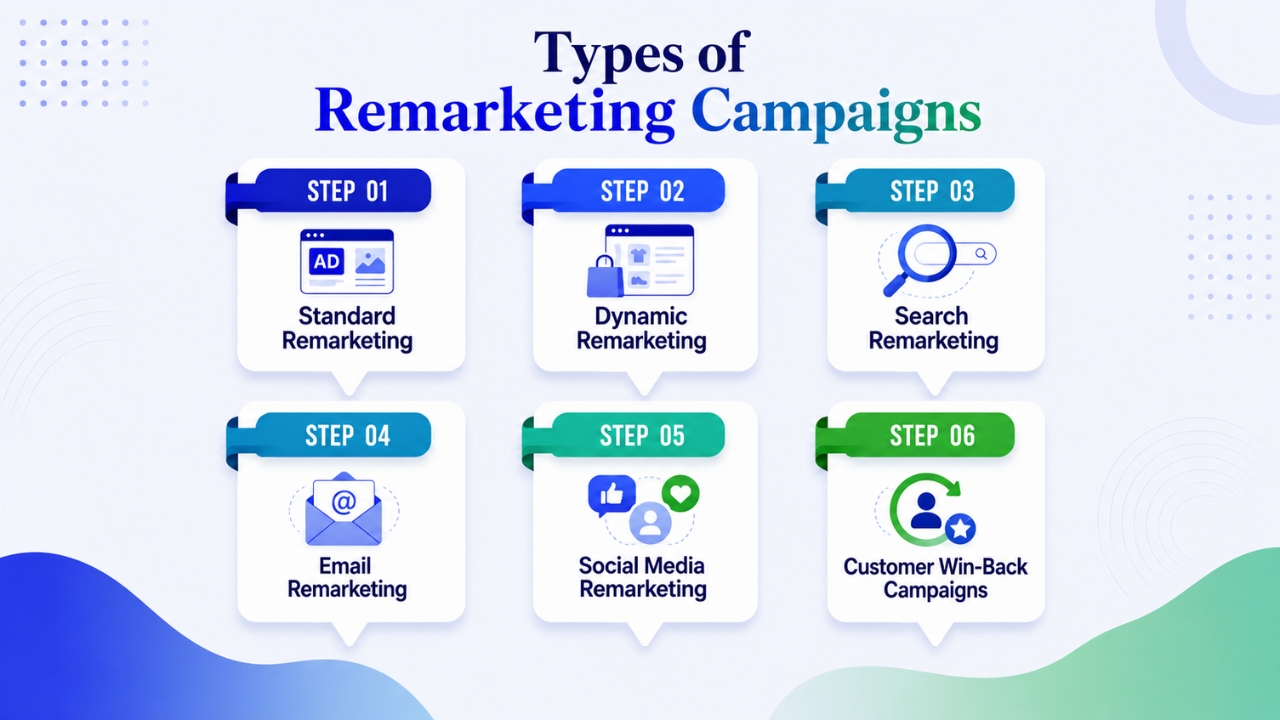
1. Standard Remarketing
This type of remarketing involves displaying targeted ads to people who have already visited your website or app. Such ads can appear on websites, mobile apps, and YouTube.
This is a simple and beginner friendly way for businesses to remind interested audiences about your products or services and motivate them to return and complete a purchase.
2. Dynamic Remarketing
This type of remarketing involves displaying personalized ads based on exact products or services that a visitor viewed on your website. Such type of remarketing is useful for eCommerce businesses because it displays product images, prices, and details rather than generic ads.
For instance, if someone views a laptop but does not buy it, dynamic marketing can show the same laptop later that encourages the customer to return and complete the purchase.
3. Search Remarketing
Search remarketing helps businesses to reconnect with people who did visit your website but did not convert. When those visitors continue searching on Google, you can display them more targeted search ads or adjust your bids on the basis of their early interest in your business.
For instance, if someone viewed your merchant services page, then you can later reach them with a stronger message when they search for related services like payment processors or small business payments.
Also Read: How to Get Your Business on Google
4. Email Remarketing
Email marketing involves using customer or subscriber lists and sending follow-up messages to them. As email feels more personal than ads, email marketing works well for longer sales cycles, B2B services, software, consulting, finance, and high-value products that require trust before conversion.
5. Social Media Remarketing
Social media remarketing helps businesses to reconnect with past website visitors or customer lists on social media platforms such as Facebook, Instagram, TikTok, and X.
This type of remarketing uses pixels, product feeds, customer data, and dynamic ads to display valid messages. It works well for visual products, testimonials, videos, brand awareness, and audiences that actively engage on social platforms.
Also Read: Explain how Social Media Marketing Has Impacted Marketing for Small Businesses
6. Customer Win-Back Campaigns
Customer win-back campaigns usually target old customers who already interacted with your business before but have stopped engaging. The goal of such customer win-back campaigns is to rebuild customer interest and encourage them to return.
It includes loyalty discounts, renewal reminders, seasonal offers, new product updates, or special deals. This type of campaign works best when the customers feel the message of the campaign to be useful, personal, and timely.
How to Build a Remarketing Strategy
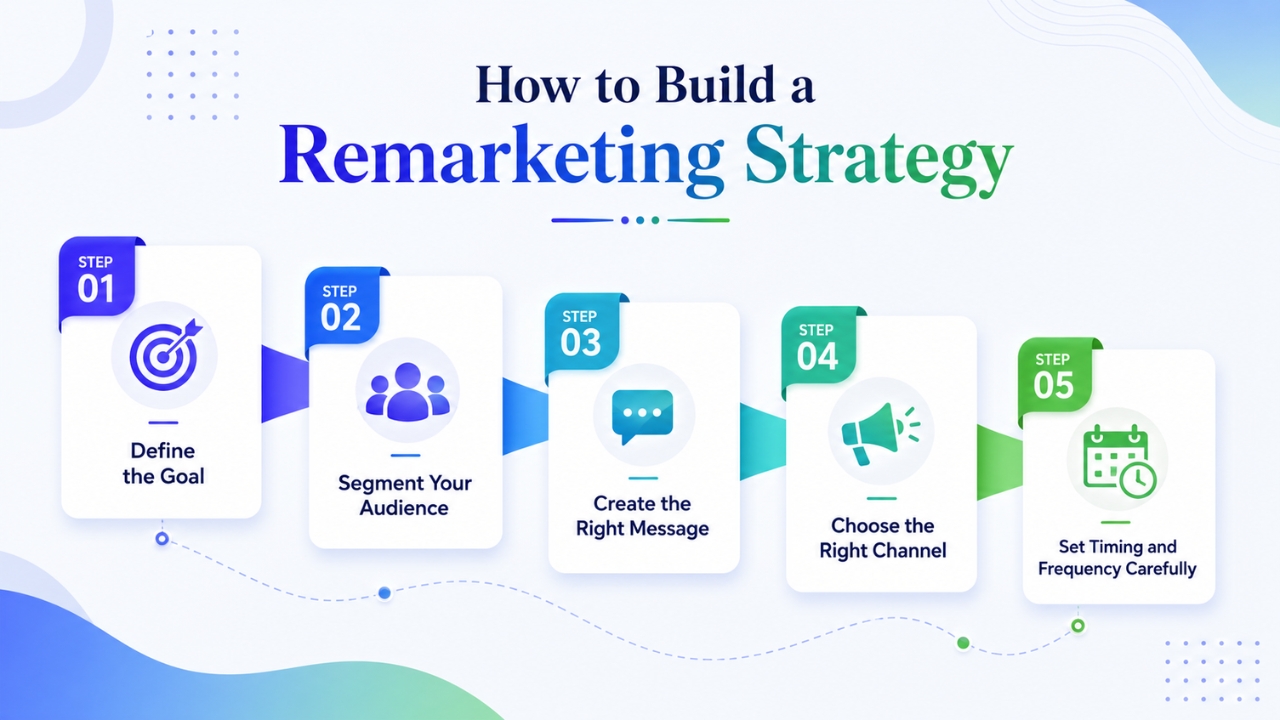
Step 1: Define the Goal
Before creating ads or emails, it is essential for businesses to define the goal which they want their campaign to achieve. Every remarketing campaign can have different goals like recovering abandoned carts, increasing demo bookings, getting repeat purchases, and promoting a seasonal sale . Your campaign should define your audience, message, offer, landing page, and budget.
For instance, if your goal is to recover audiences who abandon carts, then your audience should be the people who added items but did not purchase. While your message must focus on urgency, trust, free shipping, and reviews.
Step 2: Segment Your Audience
Audience segmentation helps businesses to convert basic remarketing into a more targeted and effective marketing strategy. Businesses can not treat every visitor in the same way.
Because a visitor who visits the homepage will be different from a visitor who visits the pricing page. Even a first-time visitor is different from a repeat visitor.
Useful segments include:
-
Low-intent visitors: blog readers, homepage visitors
-
Medium-intent visitors: service page viewers, category page viewers
-
High-intent visitors: pricing page visitors, cart abandoners, checkout starters
-
Existing customers: buyers, subscribers, repeat customers
-
Inactive users: old leads, past buyers, lapsed subscribers
By being specific about their audiences businesses can be more specific about their messages.
Step 3: Create the Right Message
Remarketing messages must do more than asking people to “Come back”. Rather your message is to explain to customers why their returning is worth it and must respond to the reason why the visitor left. The right message makes your ad feel helpful instead of being repetitive.
Use different messages for different situations:
-
Price concern: Highlight value, discounts, free shipping, or limited-time offers.
-
Trust concern: Show reviews, testimonials, guarantees, or customer success stories.
-
Not ready to buy: Share guides, comparisons, product benefits, or educational content.
-
Checkout abandonment: Remind users what they selected and make it easy to finish.
Strong instances include “Your cart is waiting,” “Still thinking it over?” and book your free consultation today.” The message that you send to the audiences must align with the current journey phase of the customer.
Step 4: Choose the Right Channel
Businesses need not to run every remarketing campaign on every platform. While the best channel depends on your audience, campaign goal, budget, and where users are most likely to respond.
Businesses that select channels help them to avoid any unwanted expenses and improve conversions.
Use channels based on purpose:
-
Google Display: Best for broad visibility and brand reminders.
-
Google Search: Useful for high-intent users still searching for similar solutions.
-
YouTube: Good for education, demos, and brand recall.
-
Email: Strong for nurturing leads and recovering abandoned carts.
-
SMS: Works well for urgent reminders when users have opted in.
-
Social media: Best for visual products, testimonials, videos, and community engagement.
A strong remarketing strategy often uses two or more relevant channels for remarketing.
Step 5: Set Timing and Frequency Carefully
Timing plays a major role in remarketing success. If businesses display ads too soon or often then the users may feel frustrated. If businesses wait too long to display ads to their audiences then they may forget your brand or select a competitor.
Set timing based on user behavior:
-
Abandoned carts: Follow up within a few hours or a few days.
-
B2B leads: Use a longer nurturing sequence with helpful content.
-
Past customers: Send win-back campaigns after 30, 60, 90, or 180 days.
-
High-intent visitors: Retarget sooner with stronger offers or reminders.
Also control ad frequency carefully. Remarketing should feel like a helpful reminder. Balanced timing ensures trust and improves conversions.
Metrics to Track
It is essential for businesses to regularly track remarketing campaigns after launch. Tracking campaign performance helps them to understand the strategies that are working, know why the users are leaving, and how to improve your ads, emails, budget, and audience segment.
Important metrics to watch include:
-
Impressions: How often your ads are shown.
-
Clicks: How many users engage with your ads.
-
Click-through rate: How effective your message is.
-
Cost per click: How much each click costs.
-
Conversion rate: How many users complete the desired action.
-
Cost per acquisition: How much each conversion costs.
-
Return on ad spend: How profitable the campaign is.
-
Email open and click rates: How well email follow-ups perform.
-
Cart recovery rate: How many abandoned carts turn into sales.
The goal of businesses must not be just customer traffic but profitable action.
Conclusion
For businesses, remarketing monitoring is essential for businesses to convert past visitor interest into real business results. Because just running remarketing ads alone is not enough.
Businesses need to track how their users respond, which audiences perform best, and whether their campaigns are actually offering profitable conversions.
By tracking crucial metrics like impressions, clicks, click-through rate, conversion rate, cost per acquisition, return on ad spend, and cart recovery rate, businesses can make smarter decisions instead of just guessing.
These insights help to improve ad messaging, adjust budgets, refine audience segments, and select the right channels for each customer phase.
A good remarketing tracking helps to protect your brand experience. This allows businesses to control ad frequency, avoid overexposure, respect user privacy, and ensure your campaigns feel helpful rather than intrusive.
It is especially crucial as customers expect more personalized, transparent, and respectful marketing.
For beginners, the best approach is to start simple. Track the most crucial actions, review performance regularly, and improve one area at a time. When done accurately, remarketing monitoring helps reduce wasted ad spend, recover missed opportunities, and build a stronger path from visitor interest to conversion.
If you have any concerns about remarketing monitoring then you may book a free demo to us at Bloggyhands and we are more than happy to assist you.
John Doe
Digital Marketing Expert
Passionate about creating valuable content that helps businesses grow through digital marketing and innovative strategies.