

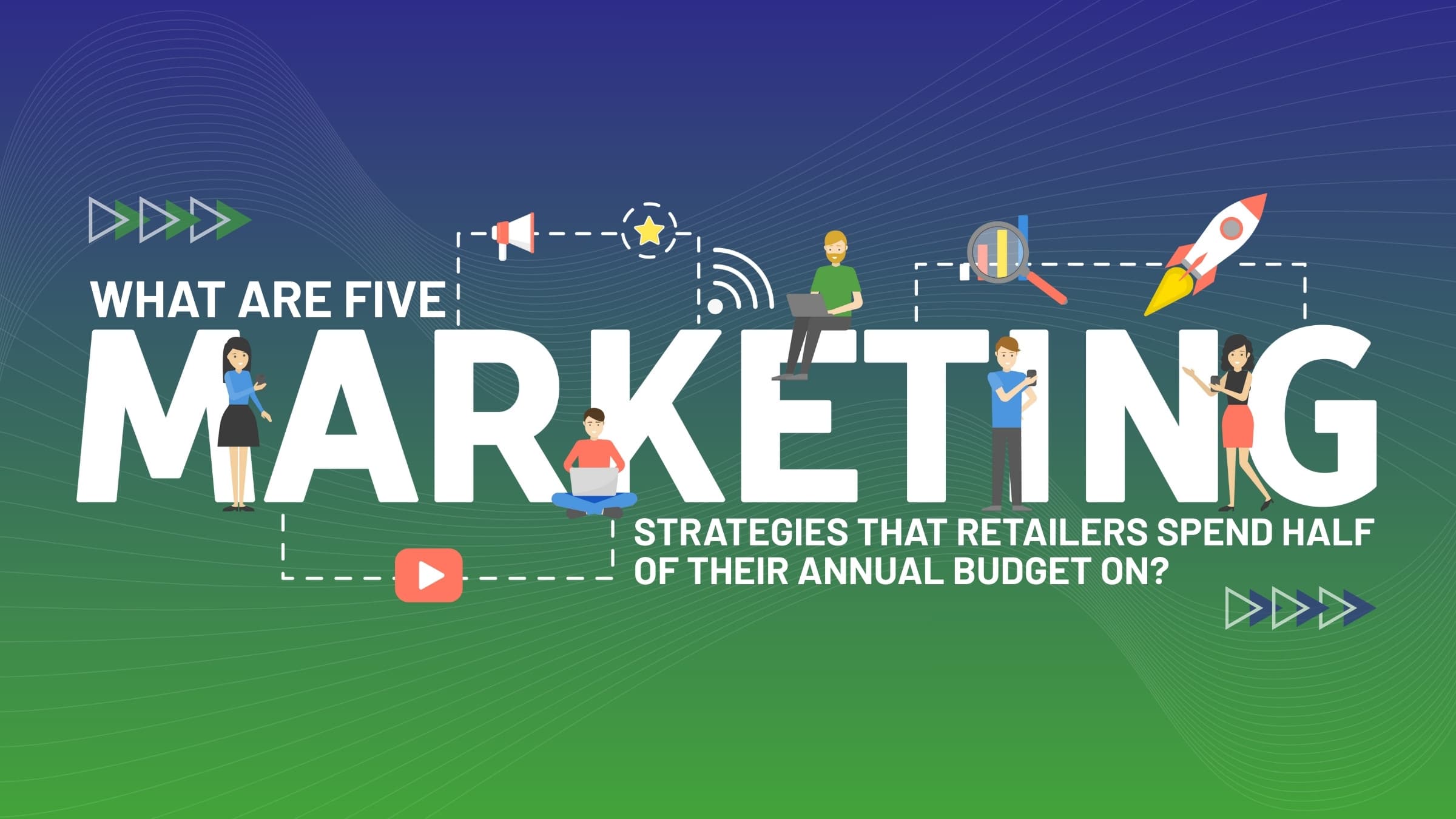
Retailers today face more intense competition due to rising ad costs and shoppers can compare brands within seconds. That is why most successful brands spend most of the budget into a few marketing strategies which they know will work, rather than trying to do all tactics at once.
Instead of focusing on a few high-impact channels which consistently drive traffic, sales, and long-term growth. In most cases, retailers spend almost half of their annual marketing budget on five important marketing strategies which are scalable, measurable, and effective across the entire customer journey.
At its core is digital advertising, which include Google Ads, Google Shopping, Google Display Network(GDN) placements, and paid social media marketing.
These channels help retailers boost brand awareness, create customer demand, and connect with shoppers at the exact time when they are ready to purchase.
The next major area where retailers spend their annual budget is on retail media and marketplace advertising, placing ads in front of the shoppers at the exact time when they are ready to buy.
Third, retailers spend their annual budget on promotions and discount campaigns to increase conversion rates and improve seasonal sales surges.
Fourth, they spend their annual budget on email and SMS marketing, and loyalty programs to boost customer retention and customer lifetime value.
Ultimately, retailers spend their annual budget on creative production like product photography, video ads, and fresh content because strong creatives drive more clicks, build brand recall , and boost ROAS.
Through this blog, we will walk you through these marketing strategies, why retailers spend their annual budget on these strategies, and how these strategies work together to drive clear, trackable results.
Top 5 Marketing Strategies That Retailers Spend Half of Their Annual Budget
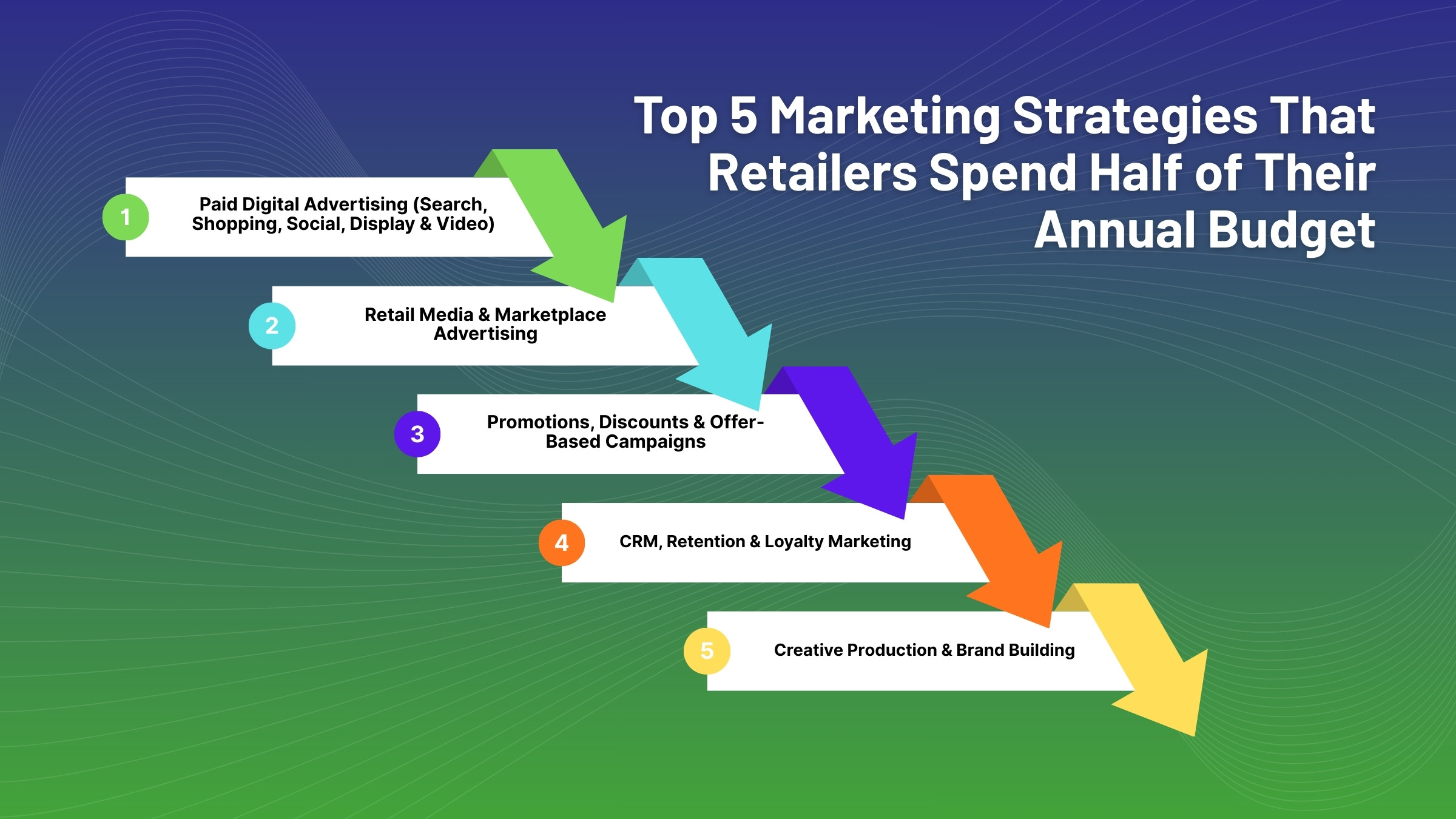
1. Paid Digital Advertising (Search, Shopping, Social, Display & Video)
Paid digital advertising is an area where retailers invest the highest because it delivers fast, measurable results. Google Search, Google Shopping, paid social, display, and video, helps brands to stay in front of shoppers from browsing to the final checkout.
Since retailers can adjust targeting, budgets, and messaging, they can grow winning campaigns quickly.So paid advertising often takes up around 25-40% of the yearly marketing budget.
Why retailers invest so heavily here
Paid ads give retailers what they want most like clear cost over targeting, the ability to grow quickly, and results they can measure. Unlike organic channels that take time, paid advertising lets brands reach customers right away, test messages fast, and turn traffic on whenever they need it.
Retailers depend on paid media to:
-
Capture high-intent shoppers searching for products
-
Introduce new products or collections
-
Retarget visitors who didn’t convert
-
Scale revenue during seasonal peaks
Where the budget goes
Retail ad budgets are usually spread across:
-
Search & Shopping Ads: Such ads reach shoppers who are actively searching for a particular product or brand and take them straight to the right product or category page.
-
Paid Social Ads: Such ads use attractive creative content to create interest and then retarget people who earlier visited your site, or added to cart across different platforms.
-
Display & Video Ads: Such ads reach people even if they are not searching while simply scrolling by displaying ads across websites, apps, and YouTube, improving brand awareness.
-
Remarketing Campaigns: Such campaigns helps you to bring back past visitors with personalized messages, product reminders, or timely offers allowing you to recover missed conversions.
Retailers spend their annual budget most on the search and shopping ads as they target users who are willing to buy. While social and display ads create demand even before the customers are ready to buy.
Why costs keep rising
Retail advertising is a sector with high competition because many brands are trying to acquire the same shoppers and keywords. It often leads to bidding wars, rising cost-per-click.
As brand visibility is closely connected to expenses, retailers must frequently keep investing to keep appearing in search results. When budget reduces, competitors get an upper hand, and losing traffic can impact sales instantly.
Key benefits retailers expect
-
Immediate traffic and sales
-
Clear ROAS and performance tracking
-
Fast testing of offers, creatives, and pricing
-
Scalable growth opportunities
Paid advertising covers a major part of annual revenue budgets because it is directly linked to trackable revenue.
Also Read: Geo Advertising Vs Traditional Marketing
2. Retail Media & Marketplace Advertising
Retail media and marketplaces ads now take a big share of retail budgets because they reach shoppers in the middle of browsing, comparing, and deciding right when they are actively searching and ready to buy.
Retail media uses first-party shopper data and high-intent placements to drive strong conversions, so as marketplace competition rises, retailers often dedicate around 10–20% of annual marketing here.
What retail media means
Retail media is paid advertising that runs on retailer’s websites, mobile apps, in-store screens, and partner ad networks. These ads let brands reach shoppers while they are already searching for particular products, comparing prices, and deciding what to buy.
As shoppers have already made their minds to buy, so retail media can influence their choices just before checkout. It may include sponsored product listings, banners, on-site search ads, and personalized recommendations.
This keeps your brand visible even when customers are deciding about their purchases which leads to more clicks, conversions, and measurable ROI for campaigns.
Why retailers prioritize this channel
Retail media is powerful because it combines:
-
First-party shopper data
-
High purchase intent
-
Direct attribution to sales
For many retailers, if your product is not showing up near the top of marketplace results, you are basically invisible, it simply does not sell.
How budgets are typically used
Retail media spend often includes:
Sponsored product placements
Sponsored product listings
Category and search result ads
Retargeting using retailer-owned data
Many retailers often spend part of their revenue on these ads to keep products visible and ranked.
The strategic advantage
Retail media allows brands to:
-
Compete directly at the point of purchase
-
Protect branded searches from competitors
-
Increase product discoverability
-
Improve conversion rates with minimal friction
Retail media is close to the buying moment, so retailers spend more on it to keep sales and visibility strong, even when costs rise.
Also Read: What is Geo Advertising and Marketing
3. Promotions, Discounts & Offer-Based Campaigns
Promotions, discounts, and offer-based campaigns cannot be considered as marketing but in retail they work like marketing.Price discounts, bundles, coupons, and limited-time deals are offered to get customer attention, create an urgency for shopping, and motivate shoppers to make purchases sooner.
Since promotions directly increase sales so many retailers allocate a percentage of their annual marketing budget for promotions offered mostly during holidays or big sale events.
Why promotions demand big budgets
Retail customers are quite price-conscious. Promotions help:
-
Trigger immediate action
-
Increase conversion rates
-
Clear inventory
-
Compete during sales-heavy periods
Usually retailers plan promotions in advance and spend confidently on promotions to ensure that the deals appear in front of as many shoppers as possible.
Where the money goes
Promotional spend includes:
-
Discount funding and margin offsets
-
Seasonal sale campaigns
-
Limited-time offers and flash sales
-
Bundles and value packs
-
Coupons and affiliate programs
Even if their budget is less, retailers use promotions to increase sales, bring new customers, and encourage repeat purchases.
Expected outcomes
-
Short-term revenue spikes: Such promotions create a feeling of urgency and remove hesitation, which makes shoppers buy now rather than later, often giving sales an instant lift within days or weeks.
-
Inventory turnover: Discounts helps to clear slow selling or seasonal inventory, reducing inventory storage expenses and free up space for new inventory stock and best-sellers.
-
Customer acquisition: Such discount offers may bring in first-time buyers who will not pay the full price, and with good buying experience may return back as repeat customers.
-
Reactivation of inactive buyers: Offering Win-back deals, limited-time coupons, and personalized offers can re-engage customers who have not purchased in weeks or months.
4. CRM, Retention & Loyalty Marketing
Acquiring new customers can be expensive, while strong retailers know that long-term growth is only possible through retention and loyalty. That is why most spend almost 10-15% of their annual marketing budgets on CRM, retention, and loyalty programs.
It involves efforts that will keep customers engaged after the first purchase and turn occasional customers to repeat customers. Retention marketing
includes email flows, SMS campaigns, app push notifications, and personalized offers on the basis of shopping behavior of customers.
Loyalty programs offer customers points, tiers, referral rewards, member perks, and early access to new products.
CRM platforms help retailers to segment customers as new buyers, high-value customers, frequent shoppers, or lapsed users and display the right message at the right time.
If executed well, these strategies increase repeat purchase, average order value, and improve customer lifetime value. It also helps to keep revenue steady during slower periods and minimize reliance on paid acquisition and heavy discounting.
With time, loyalty marketing builds stronger relationships that protect market share and improve profitability.
Why retention spending keeps growing
Because it costs quite less to retain a customer than to acquire a new customer.
Retailers know that long-term profitability depends on:
-
Lower cost than acquisition: As retaining an existing customer costs quite less than acquiring a new customer, making retention expenses more efficient and predictable.
-
Repeat purchases: Returning customers usually buy more often, creating stable revenue and reducing reliance on regular promotions.
-
Higher lifetime value: With time, loyal customers spend more per order and across more categories, increasing total customer lifetime value.
-
Stronger brand relationships: Ongoing engagement builds trust and emotional connection, making customers less likely to switch to competitors.
-
CRM-driven personalization: CRM systems help retailers segment customers and deliver relevant messages, offers, and reminders at the right time.
-
Loyalty programs: Points, rewards, and exclusive perks encourage continued engagement and turn one-time buyers into long-term, high-value customers.
CRM and loyalty programs turn one-time buyers into long-term customers.
What this budget covers
Retention marketing spend usually includes:
- Email and SMS marketing platforms
- Marketing automation tools
- Loyalty programs and rewards
- Personalization technology
- Customer data and analytics
There are also indirect costs, such as loyalty rewards, discounts, and exclusive perks.
Retailers depend on CRM marketing to:
-
Recover abandoned carts
-
Re-engage inactive customers
-
Promote new arrivals to loyal buyers
-
Build predictable revenue streams
As customer acquisition increases, retailers continue spending more of their annual budget into retention-focused strategies.
Also Read: Design That Converts Why UX is the New Sales Funnel
5. Creative Production & Brand Building
Creative production and brand building power everything a retailer puts into the market. Strong design, messaging, and storytelling makes ads more clickable, products more desirable, and the brand more memorable.
This budget covers photo shoots, video production, graphic design, copywriting, landing page creation, and the brand guidelines that keep everything consistent. When creativity is consistent and high quality, then every channel performs better.
Why creative is a major expense
Creative costs more because retail is visual. Shoppers want clear photos and videos, real-life context, and benefits they can grasp fast, and good storytelling builds the trust that drives purchases.
Creative budgets cover:
-
Product photography
-
Video production
-
Social media content
-
Influencer and creator partnerships
-
Landing page and website design
-
Brand storytelling campaigns
It is essential to update creative content regularly to stay relevant, and keep shoppers engaged across every channel.
The hidden cost of creative
Creative is not a one-time expense. Retailers must produce:
-
Seasonal assets
-
Platform-specific formats
-
Localization for different markets
-
Ongoing variations for testing
As paid media and social platforms demand fresh content, creative costs continue to rise.
Why retailers keep investing
Strong creative improves performance across every channel:
-
Higher click-through rates
-
Better conversion rates
-
Stronger brand recall
-
More effective remarketing
Retailers view creative as a growth drive, since better visuals and messaging increase engagement and conversions across every channel.
Conclusion
Retailers consistently allocated almost half of their annual marketing budgets on five core strategies because it drives immediate performance and long-term growth.
Paid acquisition channels like search, social, and display ads create customer demand and also bring new customers. Retail media secures visibility within marketplace and retailer websites which influences purchase decisions during checkout.
Promotions and offer-based campaigns create a sense of urgency for shopping, moving slow-selling inventory and creating short-term revenue spikes during busy seasons.
Equally important is CRM, retention, and loyalty marketing, which are efforts focused on repeat purchases, higher lifetime value, and stronger customer relationships at a lower cost than acquiring new customers
Finally, creative production and brand building is effective for every channel as they deliver strong visuals,clear messaging, and consistent storytelling that boosts engagement and conversions.
Together, these five strategies cover a major percentage of annual budgets because they deliver measurable results, scale as the business grows, and secure visibility in crowded markets.
Rather than chasing trends, retailers refine and rebalance spending within these proven pillars based on performance, seasonality, and market conditions ensuring sustainable growth while supporting both short-term sales and long-term brand value.
If you still have any query regarding the five marketing strategies that retailers spend half of their annual budget on then you may write to us at bloggyhands and we are more than happy to assist you.
John Doe
Owner
Passionate about creating valuable content that helps businesses grow through digital marketing and innovative strategies.