


In this digital age, social media has completely transformed how the small businesses approach marketing.
Rather than relying only on traditional advertising, companies now use social media marketing to build brand awareness, increase online visibility, and increase measurable growth.
Social media platforms like Facebook, Instagram, YouTube are now an important tool for reaching target audiences at a cost lower than traditional media.
Social media features like content marketing, social media advertising, and influencer marketing, helps small businesses to connect directly with customers and also create meaningful engagement with customers.
Implementing built-in analytics dashboards offers real-time insights which allows brands to track performance, optimize campaigns, and improve return on investment(ROI).
Earlier small businesses were not able to make such data-driven decisions.
Additionally, due to the increase of social commerce, allows businesses to include shoppable posts and in-app checkout, that allows businesses to convert engagement into immediate sales.
Bloggyhands emphasizes that combining community building, customer engagement, and strategic targeting, social media allows small businesses to compete with larger brands.
In today's digital economy, social media is not just a promotional tool, instead it is an essential tool for sustainable business growth.
Also Read: Digital Marketing Strategy for Local Business
Small Budget, Big Impact: Social Media’s Marketing Advantage
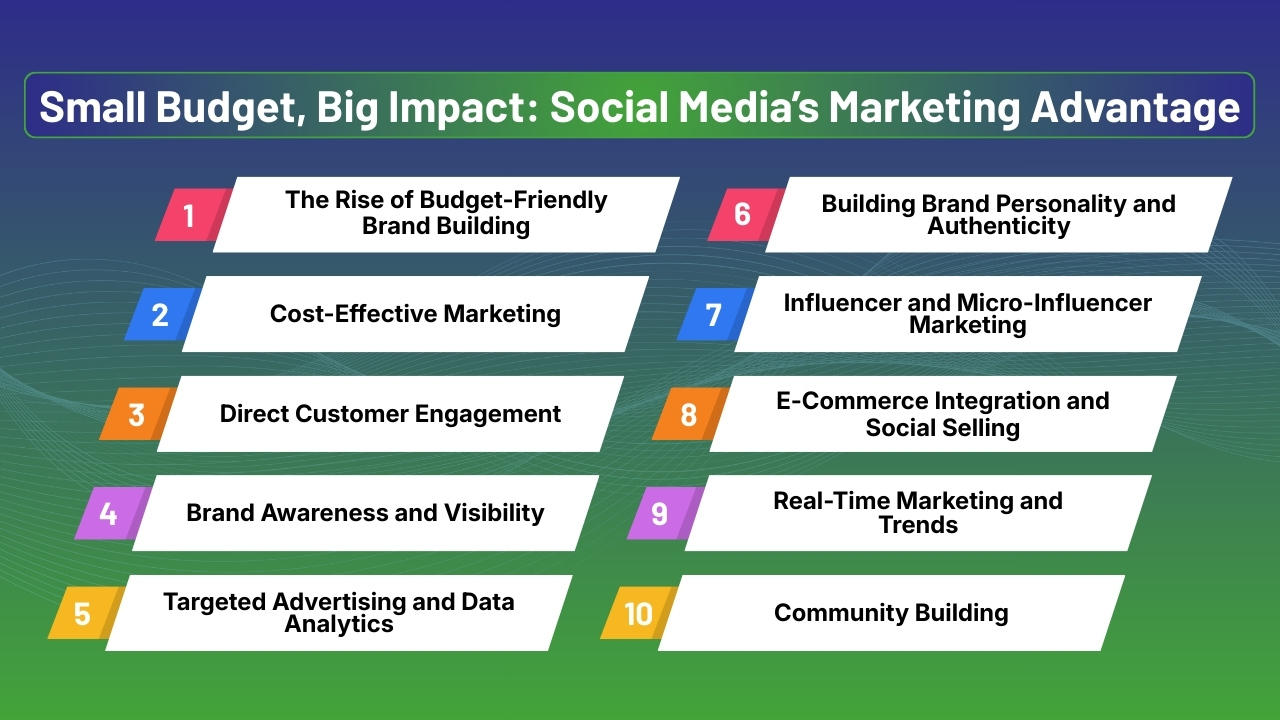
1. The Rise of Budget-Friendly Brand Building
Before social media, only large businesses were able to afford and control successful marketing as advertising budgets were high.Because marketing through television commercials, newspaper ads, billboards, and radio spots were expensive.
Then small businesses only relied on word-of-mouth, flyers, and local promotions.
Social media has changed the way brands implement marketing by reducing marketing costs, and accessibility, due to which small businesses are able to compete with larger brands through measurable, targeted digital strategies.
Today, a small business can:
-
Create a professional brand presence for free
-
Reach thousands of potential customers organically
-
Run highly targeted ads with low budgets
-
Compete for attention alongside major brands
Social media platforms like Instagram and Facebook allow small businesses to create high-quality, visually attractive content that can match the marketing of even big-brands without high advertising budgets.
2. Cost-Effective Marketing
One of the valuable benefits of social media media is that small businesses can implement cost-effective marketing.
In the past, traditional marketing often required high upfront costs for marketing through flyers and brochures, expensive media buying fees, long-term advertising contract, and production expenses for radio or television promotions.
Due to such high costs it became difficult for smarter brands to compete continuously with big brands.
Social media marketing changes that because it offers flexible marketing options for any budget. It helps small businesses to post their content for free, build an audience organically, and promote their products or services without high investments.
While using paid advertising, social media allows campaigns to begin with small budgets, which lets them to test their ideas easily and scale those campaigns that actually work.
As messaging can be instantly updated, it allows businesses to react to customer needs, seasonal or market changes instantly.
Another important advantage of social media marketing is precise targeting. As social media lets businesses target their audience based on location, age, interests, behaviors, and even purchasing habits.
Such level of control while implementing marketing improves return on investment(ROI) as every dollar that they spend can be tracked, measured, and optimized for better results.
3. Direct Customer Engagement
Social media has made marketing interactive as it allows real-time two way communication between businesses and customers. Instead of just sending messages out, businesses can now interact directly with customers and get instant feedback from customers.
Traditional marketing involved delivering messages to customers without allowing much direct interaction or feedback. Earlier businesses often relied on TV, radio, newspapers, flyers, and billboards for promotions, while customers had limited ways to respond instantly or share feedback publicly.
Engagement now happens in real time through multiple features, like:
-
Comments
-
Direct messages(DMs)
-
Review and ratings
-
Shares and reposts
-
Likes and reactions
-
Polls and Q&A tools
Small businesses benefit the most because they can:
-
Answer customer questions instantly
-
Provide product details or pricing quickly
-
Handle complaints publicly and transparently
-
Show accountability by resolving issues openly
-
Build relationships and a loyal online community
-
Share behind-the-scenes content to look more authentic
-
Highlight personality through friendly responses and storytelling
Enabling such kind of interaction helps businesses to gain customer trust. Due to which customers feel heard, valued, and respected when a business responds instantly and personally.
When customers receive fast replies from customers during any problems prevent those problems from escalating. Sending a quick DM response or comment reply can reduce customer frustration, and also protect the brand’s reputation.
Bloggyhands emphasizes engaging personally with customers helps small businesses to have a competitive advantage. It allows small businesses to create stronger connections with customers than large companies that often depend on automated systems and slower support channels.
Also Read: How to Get Your Business On Google
4. Brand Awareness and Visibility
Social media allows small businesses to create brand awareness and visibility as it allows them to place their brand content in front of their potential customers every day.
Even if you run a small bakery, a clothing boutique, fitness gym, or provide digital services, social media helps businesses to display your products or services in a way which is engaging, visual, and easy to share.
When small businesses post consistently on social media helps to build familiarity in customer’s minds over time. Because the more often people see your brand content in their feed, then there are high chances that people will remember your brand when they are ready to buy.
Social media also increases your brand reach when your posts become viral. Even if there is a single post, reel, or story that connects with customers emotionally or entertains can spread quickly and can reach thousands or millions of people.
For small businesses, even if they are successful in creating a single viral post then they create an awareness which increases among customers. Adding hashtags, trends, and collaborations helps businesses to increase their branch reach by helping new audiences discover your content through search, explore pages, and shared communities.
Small businesses can showcase content like:
-
Products and services
-
Behind-the-scenes processes
-
Customer testimonials and reviews
-
Promotions and special offers
-
New launches and updates
-
Events, pop-ups, and announcements
Visibility grows faster through:
-
Consistent posting
-
Viral shares and reposts
-
Hashtags and trending content
-
Collaborations with creators or local brands
5. Targeted Advertising and Data Analytics
Social media platforms allow small businesses to implement advanced targeted advertising and data analytics which were earlier only implemented by large companies.
Analyzing user behavior such as what people like, click, watch, and share as social media helps businesses to reach their right audience with the right message.
Even though there are privacy considerations, the data available through built-in insights and ad dashboards helps small businesses to implement marketing effectively and avoid spending on broad, untargeted promotions.
Instead of guessing what will work, small businesses can make smarter business decisions on the basis of measurable performance. This allows them to see which posts attract attention, ads that drive traffic, and know about the audiences are most likely to convert.
This leads to continuous improvement, where every campaign is more optimized which often leads to better results and higher profits over time.
Small businesses can use analytics to:
-
Track engagement rates (likes, comments, shares, saves)
-
Measure clicks, leads, and conversions
-
Analyze demographics (age, location, interests)
-
Understand content performance by format (reels, posts, stories)
-
Identify peak activity times for better posting schedules
Examples of data-driven improvements include:
-
Promoting high-engagement product posts to reach more buyers
-
Adjusting ads when a specific age group converts better
-
Creating more of the content types that bring the most website traffic
Also Read: Geo Advertising Vs Traditional Marketing
6. Building Brand Personality and Authenticity
Social media has made it easier for small businesses to build a strong brand personality in authenticity. Modern customers no longer expect perfection rather they value honesty, transparency, and warm connection with customers.
Unlike traditional advertising, that often involves scripted advertising, social media helps brands to interact with their customers naturally and in a relatable way.
This shift has helped small businesses to have a competitive advantage as they can show the people their purpose and passion behind their products or services.
Through consistent and genuine content, small businesses can create connections with customers which often go beyond simple transactions. When customers understand the story and values of a brand then they are more likely to trust, support, and remain loyal to your brand over time.
Social media allows small businesses to:
-
Share their founding story and journey
-
Highlight their mission and core values
-
Introduce team members and humanize the brand
-
Showcase real customer experiences and testimonials
-
Communicate what makes them different
Customers often connect deeply with:
-
Behind-the-scenes videos
-
Founder stories and personal updates
-
Daily operations and work processes
-
Honest challenges and learning moments
-
User-generated content shared by real customers
Such transparency helps businesses to build trust and emotional loyalty. Small businesses frequently become successful as customers feel personally connected to them and not just their products or services.
Also Read: What are the Five Marketing Strategies that Retailers Spend Half of their Annual Budget
7. Influencer and Micro-Influencer Marketing
Partnering with influencers and micro-influencer has changed the way small businesses implement marketing.
Instead of using traditional advertisements, small businesses now partner with influencers who have loyal and engaged followers on social media platforms like Instagram, YouTube.
It helps businesses to gain trust from customers instantly. As followers often consider content of influencer to be relatable and authentic so any product recommendations from them feel more genuine than standard ads. It increases customer engagement and improves purchase decisions.
Micro-influencers are those who have small but highly engaged audiences who are important for growth of small businesses. Such influencers are affordable, can target specific audiences, and offer higher engagement with audiences as compared to large influencers.
For instance, a local fashion boutique can collaborate with a regional style influencer to reach potential customers within their city.
Through such an approach, small businesses can increase brand awareness, develop user-generated content, and increase sales without spending money on large-scale advertising campaigns.
Both influencer and micro-influencer marketing helps small businesses to compete effectively with large brands.
8. E-Commerce Integration and Social Selling
Social media has allowed small businesses to merge content, engagement, and direct selling into one powerful system. Earlier businesses depended on separate websites to complete transactions.
Today, social media platforms like Instagram and Facebook allow businesses to display their products and sell directly within the application.
Modern features like Instagram Shops, Facebook Shops, product tagging, and in-app checkout have made the customer journey simple.
Instead of clicking different links or visiting external websites, customers can discover a product in their feed, view details instantly, and complete their purchase in just a few taps. This reduces any friction and increases conversions.
Such integrations also allow businesses to show demonstrations on live streaming, influencer collaborations, and interactive stories to build trust and drive impulse buying.
Small brands like clothing boutiques, handmade product sellers, and speciality retailers benefit the most from this integration model.
9. Real-Time Marketing and Trends
Social media enables small businesses to engage customers in real time by responding to trends, events, and ongoing conversations.
Social media platforms like Instagram, Twitter, and TikTok help businesses to respond instantly to viral topics, seasonal trends.
Unlike traditional marketing which involves small businesses to do long planning, social media helps small businesses to create and publish content within minutes.
For instance, a bakery can post a limited-time offer during a local festival, or a clothing brand can launch a promotion inspired by a trending hashtag. It increases your visibility and relevance.
Real-time marketing helps small businesses to improve interaction with customers. Because businesses can reply to comments, answer questions, and address their concerns instantly which builds trust and strengthens relationships with customers.
Tracking trending topics and customer feedback helps brands to know what audiences care about at that moment.
By leveraging trends and acting instantly, helps small businesses to increase engagement, attract new followers, and drive sales. Real-time marketing gives the flexibility to small businesses which allows them to compete with larger brands in a quickly changing digital environment.
Also Read: What is Geo Advertising and Marketing
10. Community Building
Social media has transformed the way marketing is done by small businesses by making community building an important growth strategy instead of additional advantage.
Social media platforms like Facebook, Instagram, and LinkedIn help businesses to create interactive spaces where customers feel they are connected, heard, and valued.
Rather than simply promoting products, small businesses can now build loyal communities with shared interests, values, or lifestyle.
Through comments, direct messages, live sessions, polls, and stories, allows small businesses to interact with customers and also receive feedback or review back from customers. Such consistent interactions increase trust and build emotional connections.
When you build an online community, customers naturally begin to share their reviews, and personal experiences that make your brand more trusted and relatable.
When people emotionally connect to your brand, then chances of them recommending your brand to their friends and family is more. Over time, such loyalty towards brands reduces your need for investing in expensive ads and also converts followers into repeat buyers and advocates.
Conclusion
Social media has changed the way small businesses do marketing. Earlier marketing required large budgets and complex advertising campaigns have evolved into a marketing success through creativity, consistency, and authentic engagement.
Now social media is not just a marketing tool, rather it is a platform that helps small businesses to tell stories, share values, and develop impactful relationships with customers.
Social media platforms like Facebook, Instagram, and YouTube allow them to respond to customers instantly, and convert them into loyal customers. It allows social media to receive customer feedback, and interact directly with customers has made marketing more warm and impactful.
With social media, small businesses have gained confidence to compete even with large brands. Enabling clear insights, targeted advertising, and cost-effective strategies, even the small businesses are able to reach the right audience with the right message.
Most importantly, marketing on social media lets small businesses grow their business at their own pace while they remain connected to the community.
In this digital age, social media is more than promotion, it is a partnership. When social media is used thoughtfully for marketing, then it becomes a powerful tool to fill the gap between businesses and the people they serve, creating long-term trust, loyalty, and sustainable growth.
John Doe
Digital Marketing Expert
Passionate about creating valuable content that helps businesses grow through digital marketing and innovative strategies.